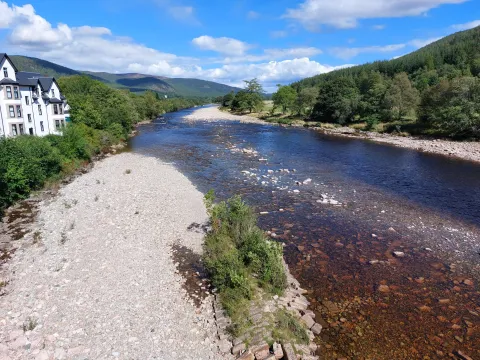
Experts from across the UK recently came together to share knowledge and evidence on a growing environmental challenge: understanding how prolonged drought affects Scotland’s freshwater ecosystems and how they recover when flows return.
The stakeholder workshop led by the University of the Highlands and Islands forms part of a CREW project Reviewing the Ecological Impacts of Short- and Long-Term Hydrological Drought, Including Intermittent Periods of Flow Recovery. Bringing together representatives from different sectors, the workshop provided an opportunity to share early project findings and identify additional evidence, datasets and practical experience to strengthen the review.
The project has been commissioned in response to increasingly frequent and severe periods of water scarcity in Scotland. In five of the last eight summers, SEPA has reported significant water scarcity across Scottish catchments. In 2025 rivers reached record lows, with several north-east rivers experiencing the highest number of low-flow days recorded in a year. In that year, low flows developed earlier than many previous droughts and were interrupted only by short periods of hydrological recovery, raising important questions about whether these short-term flow rises create the conditions sufficient for the recovery of freshwater ecosystems.
Workshop discussions highlighted the complexity of drought impacts across rivers and species. Participants shared observations from Scottish catchments, including the Rivers Spey and Eden, alongside experiences from research in Germany. Discussions explored topics including increasing algal growth during prolonged low flows, changes to aquatic plants, impacts on fish migration and disease, and the challenges of distinguishing the effects of reduced river flows from rising water temperatures.
A recurring theme throughout the day was the need to better understand what constitutes ecological "recovery". While smaller organisms may respond relatively quickly when flows return, impacts on fish populations and wider food webs may take much longer to emerge or recover.
The insights shared during the workshop will help strengthen the project's evidence review and identify important knowledge gaps. Ultimately, the findings will contribute to a better understanding of how Scotland's freshwater ecosystems respond to increasingly frequent droughts, helping to inform future water scarcity policy and environmental management in a changing climate.
CREW would like to thank the research teams (University of the Highlands and Islands, Buglife, Edinburgh Napier, British Geological Survey, University of Stirling, Nottingham Trent University and Waterside Ecology), the Project Steering Group (SEPA, NatureScot, Environment Agency and The Scottish Government) and CREW project manager, Rebekah Burman, for their ongoing dedication and support to the project and in addressing this important issue. The project is due to complete early next year (2027).
News article: Amy Cooper