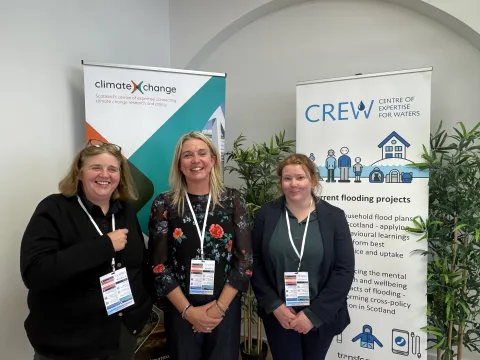
CREW, in partnership with ClimateXChange, hosted an event on the 2nd June, bringing together researchers, policymakers, practitioners and third sector organisations to explore the growing impacts of climate change, including flooding, on mental health and wellbeing.
The event showcased emerging evidence from four research projects, including two funded by CREW, highlighting who is most at risk, the pathways through which flooding can affect mental health and wellbeing, and opportunities for prevention, adaptation, preparedness, and recovery. Together, the projects demonstrated the importance of strengthening Scotland's evidence base to inform policy and support practical action.
A key theme throughout the day was the value of collaboration. By bringing together expertise from across research, policy and practice, the event provided an opportunity to share learning, identify priorities, and explore how evidence can be translated into interventions that build resilience within communities.
The event also marked the launch of the Scottish Household Flood Plan, a practical resource to help households prepare for flooding, reduce its impacts, and strengthen resilience before, during and after flood events.
In their closing reflections, Ian Freeman (Scottish Government) and Emma Kennedy (Public Health Scotland) encouraged participants to build on the momentum of the day by continuing to work across organisational boundaries. They highlighted the importance of using clear, shared language, communicating evidence effectively to support decision making, and focusing on practical interventions that will help Scotland prepare for the increasing health impacts of climate change.
The event reinforced CREW's role in supporting research that informs resilience to flooding in Scotland and demonstrated how partnerships between researchers, policymakers and practitioners can help ensure evidence is translated into meaningful action for more resilient communities.
A special thank you to colleagues from the University of Glasgow and Glasgow Caledonian University for presenting on the two recently published CREW projects (links below), and to all speakers, panellists and participants for contributing their expertise, insights and experiences throughout the day.
Access the outputs from the two CREW projects presented here:
- Reducing the mental health and wellbeing impacts of flooding: Informing cross-policy action in Scotland
Household flood plans in Scotland: Applying behavioural learnings to inform best practice and uptake
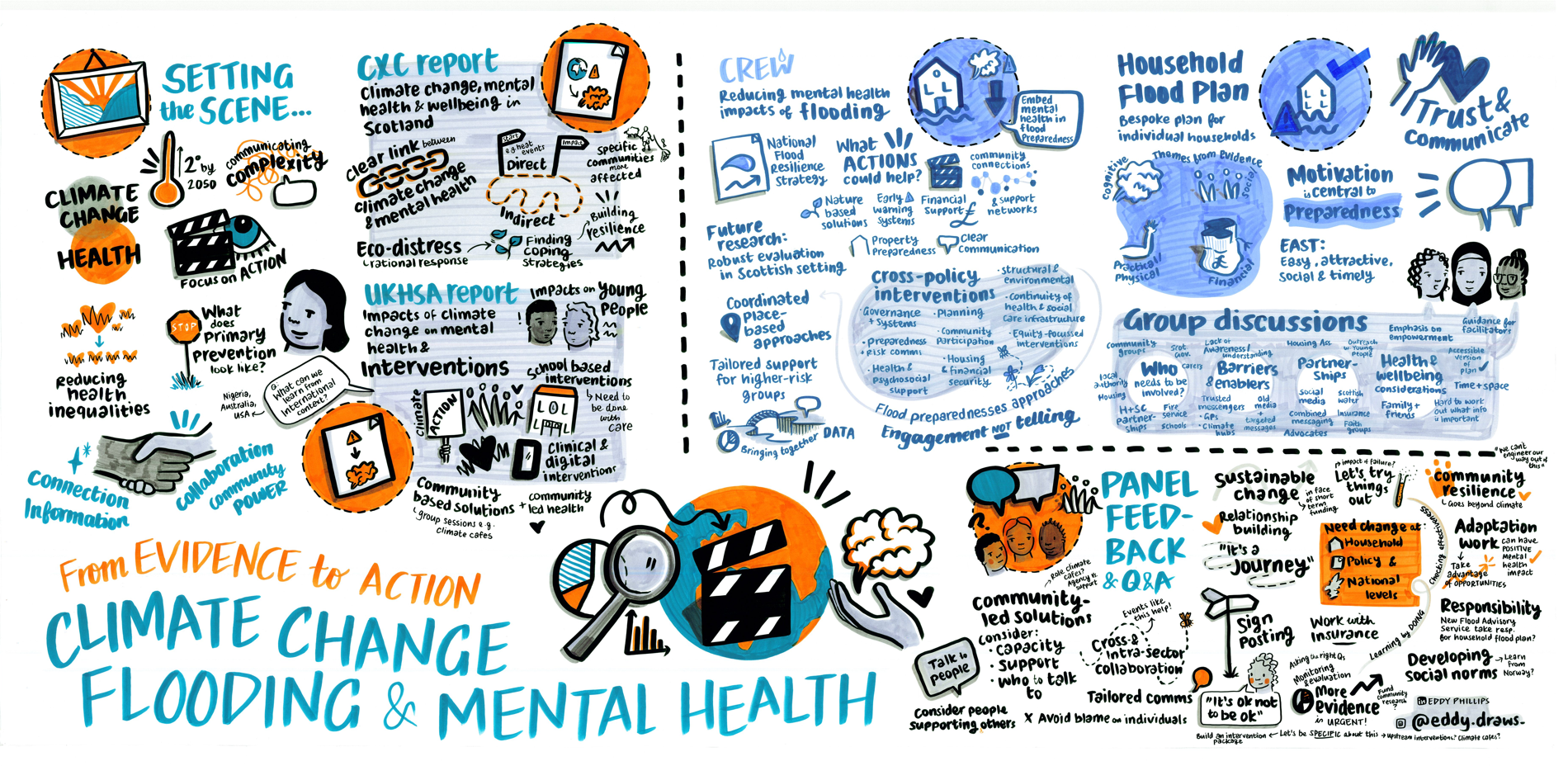
Image: Graphic recording by Eddy Draws produced live during the event. Commissioned by ClimateXChange | Scotland's centre of expertise on climate change
Article updated 4th August - further workshop details and graphic recording added.