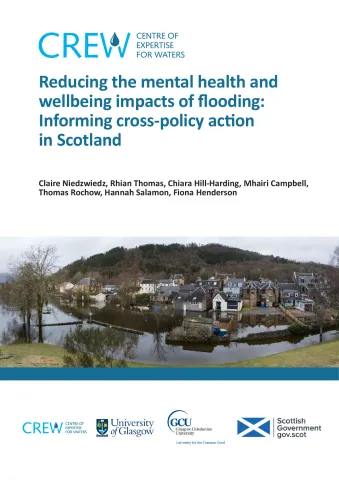
Scotland faces growing and complex risks from climate-related flooding, which is increasingly recognised as a significant public health challenge. Beyond physical damage, flooding has long-lasting impacts on mental health and wellbeing, affecting individuals, communities, and local services. These impacts can persist well beyond the immediate event, exacerbating existing inequalities and placing additional pressure on health and social care systems. While national strategies emphasise the importance of coordinated, cross-sector responses, there remains a lack of robust, actionable evidence on which interventions are most effective in reducing these mental health impacts.
This project addresses this gap by developing a stronger, policy-relevant evidence base. It combines a systematic review of interventions (including health, community, socio-economic, property-level, and nature-based approaches) with a policy analysis of how Scotland and comparable countries respond to flooding-related mental health challenges. This dual approach enables both identification of potentially effective interventions and exploration of opportunities for greater policy alignment.
By strengthening the integration of evidence and policy, the project aims to support more timely, coordinated, and effective cross-policy action to enhance resilience and protecting mental wellbeing in the face of increasing climate risk.