Research Funding cycle: 2022-27

Emerging Contaminants: Informing Scotland’s strategic monitoring and policy approaches on substances of increasing concern

The aim of this project was to inform, prioritise, and coordinate actionable monitoring and policy-based approaches to identify, assess, and mitigate risks from substances of increasing concern to Scotland’s water environment. Contaminants of increasing concern (CICs) comprise a diverse range of substances and organisms, including chemical groups such as pharmaceuticals and pesticides; biological contaminants such as pathogens and antimicrobial-resistant (AMR) genes; nanomaterials; and microplastics.
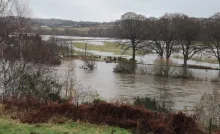

Building Public Health Resilience to Fluvial Flooding in Scotland

Climate change is increasing our exposure to fluvial flooding in Scotland. Physical and mental health are negatively impacted by flooding, with the greatest health impacts in the UK and Scotland on mental health. This CREW Policy Brief reviews the literature on the public health impacts of fluvial flooding, including physical and mental health impacts, and identifies factors that influence health resilience to flooding. 

Climate Crisis: informing Scotland’s actionable mitigation and adaptation response to water scarcity

Scotland’s climate is changing at a rate unprecedented in human history. We are becoming exposed to climate related risks, such as water scarcity, that were not considered significant in the past and have not been planned for. The first phase in addressing this shift in risk has been to develop early warning and emergency measures to mitigate the impacts of exceptional events such as the 2018 European drought and its impact in Scotland.

Mitigating climate change impacts on the water quality of Scottish standing waters

There is a policy focus at national and international levels on mitigating climate change impacts by reducing carbon emissions and increasing carbon sequestration. However, even if we can slow climate change down, we cannot prevent or reverse it. So, alternative approaches must be used to lessen its effects. These include adaptive interventions that increase the resilience, and reduce the vulnerability, of people and nature to weather extremes and other climate change impacts.