Demonstration Test Catchment national consortium
The Demonstration Test Catchment (DTC) national consortium invites you to attend a two-day conference hosted at the University of Exeter, UK, on 4th and 5th September 2017.

This report covers control measures for 13 high or moderate impact, and one ‘alarm’ species on the UKTAG list that were not covered by the Aldridge report for Natural England. It draws information from published and unpublished literature, listed best practices, technical reports, unpublished reports, project websites and expert knowledge. For each species, a report was written to present essential background information about the ecology and biology of the species. This is followed by a list of invasion pathways and known techniques to limit further spread.
The fourth ‘Valuing Your Soils’ awareness raising workshop for farmers is taking place at Leitfie farms (near Blairgowrie) on 16th March. There will be machinery demos and open soil pits. For more details on the event please see the SRUC project page.
The third ‘Valuing Your Soils’ awareness raising workshop for farmers is taking place at West Mains of Kinblethmont (near Arbroath) on 23rd Feb. There will be a drone flight and other SoilEssentials Ltd technology demonstrations. For more details on the event please see the SRUC project page.
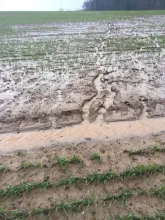
This report provides a broad assessment of the state of soil structure and drainage on commercial farms in four selected catchments during autumn/winter 2015/2016. We describe the policy implications of the findings. Similar UK studies are used to discuss our results. This project was commissioned by SEPA and addresses its Land Protection objective “make links between soil management and water protection measures to ensure maximum benefit for both soil/land and water quality” (SEPA, 2015).

SEPA are proposing to adopt monitoring to show effectiveness of rural diffuse pollution measures in reducing FIO from a livestock catchment. This will draw from the recommendations in the CREW report “Monitoring guidance to assess the effectiveness of the Rural Diffuse Pollution Plan”.
This workshop is supported by CREW at the request of SEPA. The programme includes talks from Neil MacLeod from Southesk Farms and experts from SRUC and SEPA on improving farm efficiency, the challenges associated with cultivating heavier ground and practical guidance, a farm tour with open soil pits and practical demonstrations of soil visual evaluation.
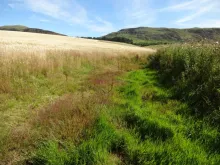
Soil cultivation, manure / fertiliser applications and chemical spraying can all contribute to diffuse pollution from agricultural land. Rainfall runoff from farm roads, tracks, yards and dusty roofs are also potential sources of diffuse pollution. Whilst many changes in farming practice have dealt with these sources of pollution there still remains instances where small amounts escape from a farmyard into a nearby ditch or where sediment laden overland field flows make their way into a ditch or burn, river or natural wetland and finally the sea.