CREW Programme Report 2016-2022
CREW is pleased to present this Programme Report (2016-2022) for the Centre of Expertise for Waters.
CREW is pleased to present this Programme Report (2016-2022) for the Centre of Expertise for Waters.
Private sewage systems (PSS) refer to systems that are not connected to the mains sewer. According to estimates by the Scottish Environment Protection Agency (SEPA) the majority of PSS in Scotland serve domestic properties. This work focuses on PSS serving up to nine properties, i.e., up to 50 population equivalent.
Climate change poses an increasing risk of drought hazards in Scotland, with those depending on Private Water Supplies particularly exposed to water scarcity. Underlying social circumstances need to be acknowledged in drought resilience policy. This project was a CREW policy fellowship aimed to improve the understanding of the social factors influencing resilience to drought exposure in Scotland in order to inform Scottish water policy.
There is “irrefutable evidence” that the global climate is changing due to human activities. Even in ‘water rich’ countries like Scotland, these changes will have implications for the future of water resources. In Scotland, changes in rainfall patterns (spatially, temporally, and seasonally), together with the frequency and magnitude of extreme weather events including flood and drought, would result in significant challenges for Scotland’s key industries including the water sector. Such changes will impact drinking water supply, energy, agriculture, economic activity, and supply chains.
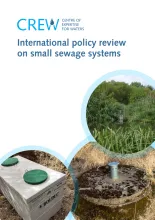
Private small sewage systems, such as septic tanks, if not properly managed, can lead to a number of issues including pollution of the water environment and nuisance issues such as ponding and odour. These issues can have significant negative impacts on local communities and are difficult for these communities to address.
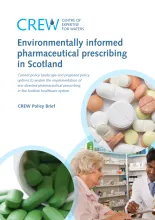
The prescription of pharmaceuticals is the most commonly used healthcare intervention and indisputably has an important role to play in human health. However, pharmaceuticals can have negative effects on the environment and living organisms. Firstly, pharmaceutical use significantly contributes to the healthcare sector’s carbon emissions. Secondly, pharmaceutical residues from human excretions and improper disposal of unused medicines can enter the water environment through wastewater and endanger aquatic life.
In March 2020 when the pandemic succeeded to 'lock Scotland down', CREW, in partnership with SEFARI Gateway, SAGES and HEIs, opened a video competition to virtually engage Scotland’s water community and share contemporary views of the importance of water in research, management, innovation and recreation.
Videos were submitted to one of seven thematic areas and were captured online for future use as a teaching resource and to promote wider engagement of our water community.
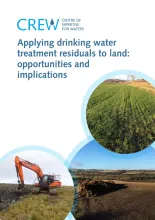
In 2018/19, Scottish Water’s treatment processes generated c.29,000 tDS2) of Water Treatment Residuals (WTR). WTR, also termed drinking water treatment sludges or bioresource, are produced due to the addition of chemical coagulants to water.
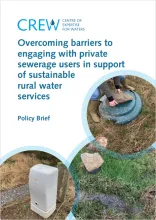
This policy brief provides an overview of the types of barriers which inhibit effective engagement with private sewerage users and makes recommendations for overcoming these challenges. The policy brief draws on grey and peer reviewed literature to highlight the key challenges faced by public agencies in engaging householders and communities with their private sewage systems (PSS), and through existing case studies details the types of tools available to support engagement.
The Metropolitan Glasgow Strategic Drainage Partnership (MGSDP) is a non-statutory partnership between public bodies involved in managing surface water, water quality, flood risk, investment planning and economic delivery, with a vision to ‘Sustainably Drain Glasgow’. The MGSDP began following severe flooding in July 2002 in the East End of Glasgow.