Sustainable Communities

World Water Day - 22 March

Every year World Water Day is celebrated on 22nd March. This year the theme is 'Nature for Water' with events being held worldwide. The theme is encouraging nature-based solutions to the problems that we currently face, like floods, droughts, and pollution. Check out more at the World Water Day website.

New collaboration agreement signed

We're delighted to announce the signing of a new collaboration agreement with India's Centre for Ganga River Basin Management and Studies, on behalf of CREW and the James Hutton Institute as part of Scotland’s Hydro Nation Initiative.

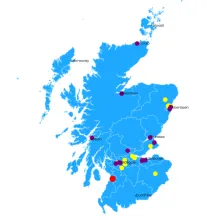
Scotland's Water Sector Map 2017

In 2015, a review of Scotland’s Water Sector was published by CREW in support of the Scottish Government’s Hydro Nation Strategy. This work reported on the scope and the scale of Scotland’s Water Sector, and how different parts of the sector link together using visual tools in the form of Scotland’s Water Map.

Evaluating the impact of the Scottish Government funded Community Resilience Development Officer Post

The aim of this study was to evaluate the Scottish Government funded Community Resilience Development Officer post at Education Scotland. The evaluation took place to inform the Scottish Government in terms of planning, and funding for, future posts of this kind. The purpose of the post is to help embed resilience thinking and online resources within the Curriculum for Excellence, i.e.to ensure resilience thinking reaches schools and children.

Policy update: Drinking Water Quality Regulator

DWQR regulates Scottish Water and supervises the regulation of private water supplies (PWS) by local authorities. It is the latter supplies which create many of the policy challenges we currently face. Questions such as “How can we persuade people of the health risk their private supply presents?” and “How can we provide individuals and communities with the tools they need to effectively manage their private supply in a way that is both sustainable and resilient?” are just two examples and ones where CREW projects have been instrumental in furthering our understanding.

Practical measures for reducing phosphorus and faecal microbial loads from onsite wastewater treatment system discharges to the environment A review

Onsite wastewater treatment systems (OWTS), the majority of which are septic tanks, are a contributing factor to phosphorus and faecal microbial loads. OWTS contribute to waterbodies failing to meet Water Framework Directive (WFD) objectives and as such, measures to improve the quality of OWTS discharges are required. Literature has been reviewed for a range of measures designed to reduce phosphorus and pathogen concentrations in effluent from OWTS. A feasibility assessment focussed on their application, effectiveness, efficiency, cost and ease of adaptation.