Sustainable Communities

Hydro Nation Scholarship Programme 2018

Applications are now welcome for project proposals based on our topic themes for 2018. Full details of the programme can be found on the Hydro Nation Scholars website.

The Hydro Nation Scholarship Programme is an open competition for PhD scholars to undertake approved projects hosted within Scottish Universities and Research Institutions.
Engaging communities around private water supplies

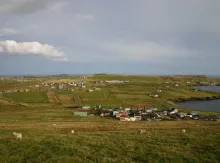
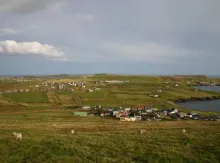
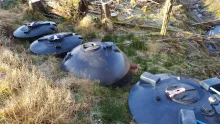
This project aimed to work with four rural communities to explore engagement around private water supplies (PWS). Approximately 3.4% of the Scottish population uses around 20,000 PWS, predominantly in rural areas (DWQR, 2016).  These drinking
water sources may not provide resilience in dry periods.  In addition, the quality of PWS is highly variable (DWQR, 2016), posing associated health risks. Failures are often due to poor or unmaintained treatment systems and sources with variable quality
(especially during wet weather events).

Water Resource Balancing: Is a closed loop system possible that enables sustainable rural supplies?

The aim of this work was to carry out a mass balance of energy, nutrients and other potential resources at a range of scales (single house, small community and large urban scale). The focus of the study was on waste water treatment and resource  recovery. The study considered whether a closed loop cycle for water and energy was possible in these situations. In doing so, the project team identified technologies, systems and approaches that may need to be adopted to make this possible.

Odour management and monitoring in Scottish wastewater treatment plants

Wastewater treatment works in Scotland have evolved substantially in the past 20 years.  During the 1990s, major investments were made to comply with the Urban Wastewater Treatment directive.  These investments were designed to protect the environment from the adverse effects of urban waste water discharges, and were not specifically focused on odour control.   Odours continued to present issues at some sites, and in 2005, a statutory Code of Practice (CoP) for odour control at sewage works in Scotland was published by the Scottish Executive.  
 

Innovative solutions for sustainable drinking water treatment at small to medium scales

Within the EU Horizon 20/20 program and The Hydro Nation Agenda water is seen as a significant enabling factor in the transition towards a resource efficiency and regenerative circular economy. While major urban managed water systems have seen
much improvement in performance, small to medium supplies still require optimisation. The research undertaken addressed the need to optimise the overall sustainability of small to medium sized water treatment processes.

Scotland's Water Sector: An overview

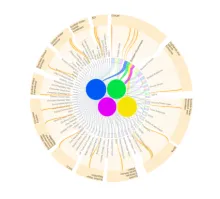
The purpose of this research is to produce a map that demonstrates the scope and scale of Scotland’s water sector and demonstrates how the different parts of the sector link together. It demonstrates how the decision making processes that influence, manage and control Scotland’s water resources are distributed throughout the sector. This research supports the Scottish Government’s Hydro Nation Strategy.

Benefits of private water supply grants

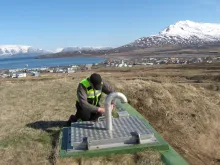
Private water supplies provide ~3% of the Scottish population with their main source of drinking water. Many more people encounter private supplies when they stay in holiday accommodation and visit the more remote parts of Scotland, although PWS can be found in urban areas. The quality of these supplies is variable; many have adequate treatment and are well managed, but others present a risk to health due to the quality of the raw water and inadequate, or absent, treatment.

Piloting a water restoration park in Scotland

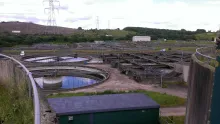
This report responds to a CREW call down request submitted by Scottish Water to support the establishment of a pilot Water Restoration Park at a waste water treatment works (wwtw) to reclaim, recycle and market the waste water. The research sought to investigate potential locations to pilot a Water Restoration Park, regulatory frameworks and potential markets for the recycled water.