Sustainable Communities

Mapping of water supply-demand deficits with climate change in Scotland: land use implications
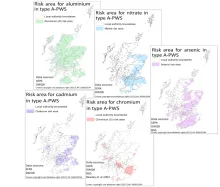
The supply-demand balance is a key measure of water resource sustainability.This balance is highly uneven across Scotland with much of the demand for water in the drier east. Agricultural irrigation is increasing in many areas, linked to land use change and requirements for high-quality produce. Better knowledge of the water balance can help secure its multiple benefits, including food security, energy crops, and the natural environment. A changing climate has implications for both water supply and demand but previous assessments have not included the influence of land use.

Blue Health: Water, Health & Well-being – Salutogenic Benefits

This research builds on the current evidence base showing a salutogentic (i.e. health improving) benefit of green space (termed “green health”). Based on this evidence we posited that water settings (blue space) should hold similar health benefits, i.e. offer opportunities for increased physical activity and recreation; afford opportunities for social contact – planned or impromptu; and promote psychological restoration and stress reduction.

Blue Health: Water, Health & Well-being – Sustainable Drainage Systems

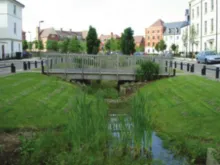
There is increasing interest in exploring the health and well-being impacts of water in the environment (blue health), including the potential of Sustainable Drainage Systems (SUDS) to enhance amenity for residents. Blue health research is relatively new, and the purpose of this project was to review the literature and draw together any research evidence about the health impacts of SUDS.

Blue Health: Water, Health & Well-being

This research reviews the evidence base for both positive and negative relationships between water in the landscape, health and well-being (termed blue health). Water is important for human health, both physiologically and psychologically; however, much of the research on blue health has focused on pathogenic associations between water and health i.e. the effects of environmental toxicology and poor water quality on disease and illness.

Evaluating CREW Year 2: Full Report

The Evaluating Science Policy Practice Interface (ESPPI) Project aims to assess how far CREW is meeting its original three objectives, and to make recommendations to the CREW Facilitation Team (CFT) and the CREW Steering Group (CSG) for future improvements. This report is based on the views of people involved in CREW (researchers from the James Hutton Institute and the university sector, and policy / practice customers in the Scottish Government, SEPA and Scottish Water).

Assessing impact of research on policy: a literature review

This review provides insights into how to evaluate the impact made by knowledge created by CREW activities and whether such impact leads to improved environmental, social and economic outcomes via evidence-based water management.   It is widely recognised that impact is more likely to occur when research is co-constructed with research users and is designed with a specific context and use in mind.

Evaluating Knowledge Exchange; A Review

This review brings together literature relevant to evaluating projects and programmes that aim to enhance knowledge exchange (KE) between researchers, policy makers and other stakeholders (i.e. anyone with a ‘stake’ in a process or problem). The review aids the development of evaluation procedures to understand the effectiveness of KE projects implemented by CREW.

Evaluating CREW Year 1 Reports

Scotland’s centre of expertise connecting water research and policy (CREW) delivers objective and robust research and professional opinion to support the development and implementation of water policy in Scotland. Although the importance of demand-driven science to support policy and practice is increasingly recognised, it is not easy to ensure that information is communicated effectively, to the appropriate end-users, in a suitable format, and at the best time to impact on policy or practice.

Learning from community led flood risk management

While flood risk management (FRM) policy in Scotland requires the consideration of natural flood management (NFM), many landowners do not yet support their implementation. Since many measures to support NFM can only be carried out with the support and participation of land-managers, it is particularly important to understand the perceptions of these stakeholders.