Water Quality and Health

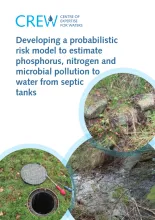
Developing a probabilistic risk model to estimate phosphorus, nitrogen and microbial pollution to water from septic tanks

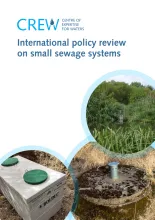
Septic tank systems (STS) are private sewage treatment facilities which typically serve the population not connected to main sewer networks. There is substantial uncertainty about the impact of septic tanks on water quality, primarily because of a lack of information about the location, number and condition, and inadequate monitoring of the effects of septic tank discharges to surface water and groundwater.  

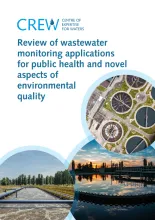
Review of wastewater monitoring applications for public health and novel aspects of environmental quality

Wastewater-based epidemiology (WBE) has received increasing attention over the past year across the world. In the UK, local, regional and national wastewater monitoring programmes were established in 2020 to detect severe acute respiratory syndrome coronavirus (SARS-CoVID-2) patterns in human sewage to monitor outbreaks. The establishment of these monitoring programmes has seen considerable investment into establishing the infrastructure, methodology and resources needed to sample, analyse, and interpret data from WBE.

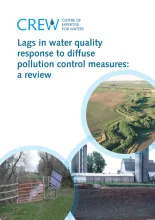
Lags in water quality response to diffuse pollution control measures: a review

A systematic review of evidence on lags in water quality response to diffuse pollution control measures implemented in Scotland is reported. The review focused on key pollutants in catchments smaller than 300 km2 in temperate regions. Findings were evaluated based on catchment typologies (e.g. catchment size, precipitation, land use, pollutant residence time, and soil /waterbody type) and data/analyses (e.g. monitoring design and record length). There was no evidence supporting fixed timeframes for a water quality response to measures or catchment typology -based lags.

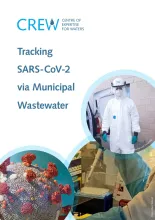
Tracking SARS-CoV-2 via Municipal Wastewater

Sampling wastewater from a community can be a relatively straightforward way to determine if specific agents are being excreted by that population. As SARSCoV-2, the causative agent of COVID19, can be present in the faeces of infected people, then it may be possible to determine if a community has infected individuals by monitoring the wastewater or other sewage samples for the presence of the virus.

Investment decisions at small drinking water supply systems

This project sought to review the challenges in delivering drinking water compliance, with a focus on the quality and quantity of investment drivers, and to assess the proposed or deployed solutions against these criteria. These outputs will assist in identifying value for money criteria for investment; identify how the policy and regulatory framework includes water treatment choices, risk appetite and costs; identify how changes to the policy framework could improve value for money and sustainability and inform policy on drinking water treatment based on economics and quality enhancement.

Innovative solutions for sustainable drinking water treatment at small to medium scales

Within the EU Horizon 20/20 program and The Hydro Nation Agenda water is seen as a significant enabling factor in the transition towards a resource efficiency and regenerative circular economy. While major urban managed water systems have seen
much improvement in performance, small to medium supplies still require optimisation. The research undertaken addressed the need to optimise the overall sustainability of small to medium sized water treatment processes.